What a Private Yoga Instructor Singapore Can See That a Mirror Cannot
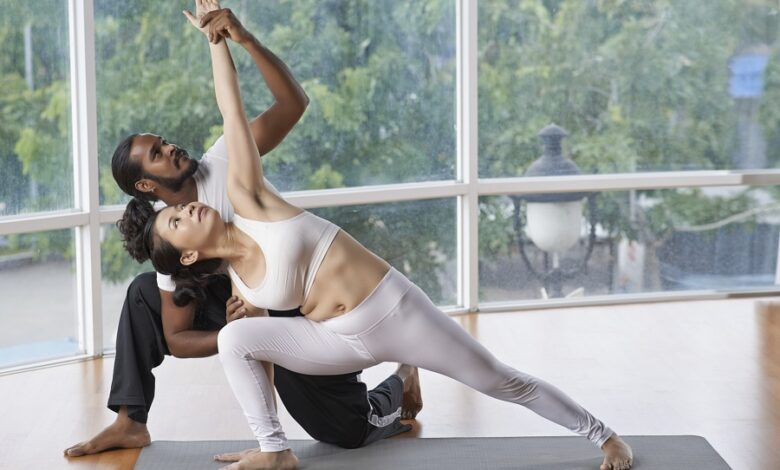
Mirrors provide immediate visual feedback, but they show only one angle and often encourage participants to judge the final shape rather than the movement used to reach it. Working with a private yoga instructor singapore adds observation of timing, breathing, weight distribution and changes that occur as fatigue develops.
An instructor does not possess perfect insight simply by watching. The value comes from combining external observation with the participant’s description of effort, comfort and confidence.
A Mirror Shows Position, Not the Complete Process
A participant may look stable in the final posture while having used momentum to enter it. The mirror captures the moment they choose to inspect, not necessarily the transition that preceded it.
This limitation matters because entry and exit often reveal more than the hold. A person may shift quickly away from one leg, rotate the pelvis during a balance or lose shoulder control while lowering.
An instructor can watch the complete movement and decide whether the transition needs to be slowed, supported or simplified. The final pose may remain unchanged while the way it is performed improves substantially.
Breathing Changes Are Difficult to See Alone
Participants concentrating on their reflection may not notice that they have stopped breathing. They may also lift the chest dramatically in an attempt to appear upright.
An instructor can observe signs such as increased neck tension, a clenched jaw or sudden rigidity around the trunk. These signs do not provide a diagnosis, but they can indicate that the current range or duration is demanding too much.
The instructor may reduce the pose depth, shorten the hold or ask the participant to return to a natural breathing rhythm.
Breathing should not become another visual performance. Its purpose is to help manage effort.
Weight Distribution Is Often Misleading
A posture can appear symmetrical from the front while most body weight rests on one foot. The participant may not feel the difference because the preferred strategy is familiar.
An instructor can view the pose from several angles, observe pressure changes and ask the participant to compare sides. Simple adjustments may involve moving the feet, changing stance length or using hand support.
Perfectly equal weight is not always required. The appropriate distribution depends on the exercise. The important question is whether the loading choice is intentional and manageable.
Fatigue Reveals Patterns Over Time
A mirror provides feedback at a single moment, but technique can change during a hold or repeated movement.
The instructor may notice that:
- One knee changes direction after several breaths.
- The shoulders rise as arm fatigue develops.
- The participant begins rushing later repetitions.
- One foot grips the floor more aggressively.
- The pelvis rotates progressively.
- Breathing becomes shorter near the end of the set.
These changes help identify the point at which exercise quality begins to decline.
The solution may be fewer repetitions or a shorter hold. Extending the set after control changes may practise compensation rather than the intended movement.
Mirrors Can Encourage Cosmetic Alignment
Visual feedback often draws attention to whether the body resembles an idealised image. This can create unnecessary attempts to force symmetry or pose depth.
Individual anatomy influences how movement appears. Limb proportions, joint shape and natural structural differences mean that two people can perform the same task effectively without looking identical.
A private instructor should evaluate whether the position serves its intended purpose and remains comfortable. Cosmetic uniformity is not the goal.
This is particularly important for clients who are already flexible. A deeper-looking position may be less controlled than a smaller range.
External Observation Must Include Internal Feedback
An instructor can see movement but cannot feel it. A position that appears well organised may still create pain, pressure or uncertainty.
Useful private instruction includes questions such as:
- Where do you feel the main effort?
- Can you breathe comfortably?
- Does one side feel less secure?
- Is there pressure in a joint?
- Could you reverse the movement slowly?
- Does this variation feel more or less manageable?
The answers may lead the instructor to change an exercise even when its appearance seems acceptable.
Participant feedback should not be overruled merely because the pose looks correct.
Observation Can Clarify the Right Cue
General instructions such as “engage the core” or “open the chest” can produce different responses. A participant may brace excessively or force the shoulders backwards.
In a private session, the instructor can observe the result immediately and replace an ineffective cue. They might change the task instead of repeating the same words.
For example, using a wall may teach weight distribution more effectively than describing it. A block can create a clear range limit. A slower tempo can reveal whether control remains available.
Good instruction adapts both the exercise and the language.
Video and Mirrors Still Have a Role
External tools are not unnecessary. A short video can help the participant understand what the instructor observed, while a mirror can support immediate orientation.
Technology works best when it answers a specific question. Recording every pose or checking the mirror continuously can reduce internal awareness.
The instructor and participant can decide when visual feedback is helpful and when it should be removed. A task performed away from the mirror may reveal whether the participant can rely on sensation and learned cues.
Recordings also require clear consent and responsible handling of personal data.
Use Observation to Build Independence
At Yoga Edition, a one-to-one participant can receive feedback on patterns that are difficult to identify from a front-facing reflection. The instructor can then help the client develop cues that remain useful outside the private session.
The objective should not be permanent dependence on another person’s eyes. Over time, the participant should become better at recognising breathing changes, loss of control and unsuitable range independently.
A mirror can show what a pose looks like. Skilled observation adds information about how it developed, how it changes under fatigue and whether the participant can manage it comfortably. That broader view is where private instruction provides its strongest value.