Treatment
Exploring Minimally Invasive Treatment Techniques
For decades, major surgical intervention required large incisions, significant muscle disruption, extensive hospital stays, and lengthy, painful recovery periods. Traditional open surgery, while life-saving in countless scenarios, inherently inflicts secondary trauma on healthy tissues simply to access the problem area.
The rapid evolution of medical technology has driven a profound paradigm shift toward minimally invasive treatment techniques. By utilizing advanced optical systems, micro-instrumentation, high-resolution imaging, and robotic assistance, modern surgeons and clinicians can now treat complex internal conditions through incisions no larger than a keyhole, or even through natural body pathways. This shift has altered patient outcomes, lowering systemic stress, minimizing post-operative complications, and transforming procedures that once required weeks of bed rest into outpatient events.
The Principles Behind Minimally Invasive Approaches
The primary objective of minimally invasive intervention is to achieve the same or superior therapeutic outcome as conventional open surgery while causing minimal collateral damage to surrounding tissues.
To accomplish this, surgeons rely on several core principles:
-
Miniaturized Access Portals: Instead of a single, large incision spanning five to ten inches, surgeons make several tiny punctures, typically ranging from three to twelve millimeters.
-
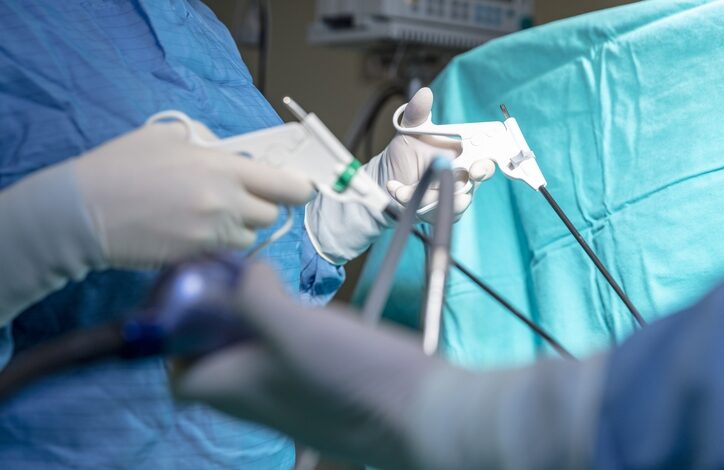
High-Definition Visualization: Miniature fiber-optic cameras, known as endoscopes or laparoscopes, are inserted through these small openings. They project magnified, three-dimensional views of internal structures onto surgical monitors, often providing greater visual clarity and precision than the naked eye could achieve in open fields.
-
Targeted Instrument Articulation: Specialized instruments with articulated wrist mechanisms can enter tiny incisions and perform delicate cutting, cauterizing, and suturing tasks inside confined anatomical spaces.
-
Tissue Sparing Mechanics: Rather than severing muscles and connective tissue layers to reach deep organs, instruments gently separate tissue fibers, substantially preserving structural integrity and reducing trauma-induced inflammation.
Major Categories of Minimally Invasive Techniques
Minimally invasive therapies encompass a wide array of specialized modalities across multiple medical disciplines.
Laparoscopy and Endoscopy
Laparoscopy is among the most widely recognized forms of minimally invasive surgery, routinely used for abdominal and pelvic procedures. A harmless gas, such as carbon dioxide, is introduced into the cavity to create a working space, allowing the surgeon to manipulate instruments safely around vital organs. Common applications include gallbladder removals, hernia repairs, appendectomies, and hysterectomies.
Endoscopy involves passing a flexible tube equipped with lighting and a camera through natural body openings like the mouth, nose, or gastrointestinal tract. This allows doctors to examine tissue, collect biopsies, remove polyps, or seal bleeding vessels in the esophagus, stomach, and colon without making a single skin incision.
Robotic-Assisted Surgery
Robotic platforms represent a major technological leap forward from traditional laparoscopic tools. In robotic-assisted procedures, the surgeon sits at an ergonomic console beside the operating table, viewing the surgical site through a high-definition 3D viewfinder.
The surgeon manually controls robotic arms equipped with micro-instruments that mirror human hand movements. The robotic interface filters out natural hand tremors and provides greater degrees of motion and rotation than human wrists can achieve, making it invaluable for delicate operations such as radical prostatectomies, complex cardiac valve repairs, and pelvic reconstructive surgeries.
Endovascular and Catheter-Based Therapies
Interventional cardiology and vascular surgery have been transformed by catheter-based methods. Using real-time fluoroscopic X-ray imaging, physicians insert thin, flexible wires and catheters through a pinprick in the femoral or radial artery and guide them throughout the vascular system.
-
Angioplasty and Stenting: Narrowed or blocked arteries are widened using small inflatable balloons, followed by the deployment of wire mesh stents to maintain blood flow.
-
Aneurysm Coiling and Embolization: Fragile bulges in cerebral or abdominal blood vessels are packed with microscopic platinum coils or liquid embolic agents to prevent rupture.
-
Transcatheter Valve Replacement: Damaged heart valves are replaced without opening the chest wall, delivering a collapsed artificial valve via a catheter and expanding it directly inside the diseased native valve.
Image-Guided Ablation and Radiosurgery
In oncology and interventional radiology, minimally invasive treatments destroy tumors without surgical excision. Using computed tomography, ultrasound, or magnetic resonance imaging for guidance, doctors insert thin needle probes directly into abnormal tissue.
-
Radiofrequency and Microwave Ablation: High-frequency electrical currents or microwave energy generate localized thermal heat, destroying malignant cells in organs such as the liver, kidneys, and lungs.
-
Cryoablation: Extremely cold gases circulate through specialized needles, freezing and killing targeted tumor tissues while leaving surrounding healthy organs largely unharmed.
-
Stereotactic Radiosurgery: High-dose, precisely focused beams of radiation converge on deep tumors, delivering destructive radiation doses to the target while sparing adjacent healthy tissue.
Clear Clinical Advantages for Patients
The widespread adoption of minimally invasive strategies is backed by extensive clinical evidence demonstrating measurable advantages over open surgical techniques.
-
Marked Reduction in Post-Operative Pain: By preserving muscle walls and avoiding extensive wound retraction, patients experience far less post-surgical discomfort, substantially lowering reliance on opioid painkillers.
-
Lower Risk of Hospital-Acquired Infections: Smaller incisions limit the exposure of internal tissues to atmospheric air and hospital pathogens, significantly dropping surgical site infection rates.
-
Minimal Blood Loss and Reduced Transfusion Needs: High-magnification optics allow surgeons to identify and seal micro-vessels with precision, drastically reducing intraoperative blood loss.
-
Shorter Hospital Stays and Faster Recovery: Many minimally invasive procedures are performed in outpatient settings, allowing patients to return home the same day. Inpatient procedures that once required week-long stays are often reduced to twenty-four or forty-eight hours.
-
Superior Cosmetic Outcomes: Tiny puncture marks heal with minimal scarring compared to long, visible surgical scars, reducing the long-term risk of incisional hernias.
Considerations, Boundaries, and Limitations
Despite its clear advantages, minimally invasive surgery is not a universal solution for every clinical situation. Patient safety and procedural efficacy dictate whether an open or closed approach is appropriate.
Certain anatomical factors, such as extensive scar tissue from prior operations, massive internal hemorrhaging, complex multi-organ traumas, or extremely large tumors, may require the unrestricted access and tactile feedback that only open surgery provides.
Additionally, these procedures demand specialized equipment and steep learning curves for surgical teams. Surgeons must maintain rigorous training to master hand-eye coordination when working with two-dimensional monitor displays and robotic interfaces. Surgical teams must also always be prepared to convert a minimally invasive operation into a traditional open procedure if unexpected complications or anatomical variations arise during surgery.
Frequently Asked Questions
What happens if a minimally invasive procedure cannot be completed as planned?
If unexpected anatomical anomalies, severe adhesions, or uncontrollable bleeding occur during the procedure, the surgical team will immediately convert the operation to an open surgery. This conversion is a standard safety protocol, not a surgical failure, ensuring the patient’s well-being remains the absolute priority.
Is general anesthesia always required for minimally invasive procedures?
While many laparoscopic and robotic surgeries require general anesthesia to relax muscles and safely inflate cavity spaces, numerous catheter-based, endovascular, and radiological ablation treatments are performed using local anesthesia paired with moderate conscious sedation. The choice depends on the procedure type, duration, and individual patient health factors.
Are long-term cure rates for cancer equal between minimally invasive and open surgeries?
Extensive clinical trials show that for many early-to-intermediate stage cancers, including colorectal, renal, prostate, and lung malignancies, minimally invasive oncological resection provides equivalent survival and disease-free rates compared to traditional open surgery, while offering significantly easier recoveries.
Why do some patients report shoulder pain after laparoscopic abdominal surgery?
During laparoscopic surgery, carbon dioxide is used to inflate the abdominal cavity, creating a visible working space. Residual pockets of this gas can temporarily irritate the phrenic nerve near the diaphragm, sending referred sensation up through nerve pathways that register as mild ache in the shoulders. This sensation naturally resolves on its own within two to three days as the body reabsorbs the gas.
How do surgeons maintain a sense of touch when using robotic systems?
Most modern robotic consoles rely heavily on advanced visual feedback rather than direct physical resistance, allowing skilled surgeons to assess tissue tension, density, and elasticity through micro-visual cues on high-definition 3D displays. Advanced systems are continuously integrating haptic feedback technologies to simulate physical resistance directly back to the surgeon’s control handles.
Can a patient with multiple previous abdominal surgeries still undergo a minimally invasive procedure?
Previous surgeries often create dense internal fibrous scar tissue, known as adhesions, which can stick organs together and obscure access pathways. While this increases technical complexity, an experienced surgeon can often use delicate visual dissection techniques to clear adhesions and perform the procedure safely, though the likelihood of needing an open approach may be slightly higher.
Are insurance plans and healthcare systems widely supportive of minimally invasive options?
Yes, most major health insurance providers and national healthcare systems cover minimally invasive procedures because their safety profiles, lower complication rates, and shortened hospital stays generate substantial long-term value and reduce readmission rates. Coverage depends on standard clinical guidelines and the specific diagnosis being treated.